

Navigating identity, family expectations, and life between cultures can be its own kind of weight. Our therapists help you make sense of it, on your own terms.
Latinx mental health therapy is culturally responsive care that treats your background as part of the clinical picture, not something separate from it. It’s built to address the experiences that generic therapy often misses: family expectations, generational gaps, cultural identity, discrimination, and the everyday reality of navigating two cultures at once, even if you’ve lived in the U.S. your whole life. Research from the American Psychiatric Association confirms what many Latinx individuals already sense: cultural and intergenerational stress are real, documented contributors to anxiety and depression, not just personal shortcomings to push through.
For many of our clients, this isn’t about being new to this country, it’s about growing up here and still feeling the pull of two worlds every day. Maybe it’s the guilt of setting a boundary your parents wouldn’t recognize. Maybe it’s code-switching between who you are at home and who you are everywhere else. Maybe it’s just never quite fitting the mold on either side.
These aren’t small things. They shape how you show up in relationships, how you talk to yourself, and how much of your real self you feel safe sharing, even with the people closest to you. Left unspoken, that tension doesn’t disappear, it just gets carried quietly.
Working with a therapist who actually understands this changes the conversation entirely. You can talk about family expectations, the pressure to hold it all together, or the exhausting act of translating yourself for people who don’t share your context, without having to explain the basics first. At Latinx Talk Therapy, our bilingual, Chicago-based clinicians bring both clinical training and lived understanding of exactly this experience.
At Latinx Talk Therapy, being culturally sensitive means more than acknowledging where a client comes from, it means actually understanding how culture shapes who you are, how you communicate, and even how stress or sadness show up for you in the first place. Your family’s values, the things left unsaid, the pressure to hold it together, that’s not background noise here, it’s part of the work.
We use real, evidence-based tools like cognitive behavioral therapy (CBT), but we bring your background into the room with you, not the other way around. Sessions are available in English or Spanish, whichever lets you show up as fully yourself.
You don’t need to have the right words ready. Many of our clients are trying therapy for the first time in their family, and that’s completely normal. We’ll start by getting to know you, what’s bringing you in, what feels heavy, what you’re hoping might feel different. From there, we build a plan together. Your sessions are confidential, with the standard legal exceptions required of all licensed therapists.
Our Chicago-based, bilingual clinicians understand the specific weight of living between cultures, because many have lived it themselves. This isn’t something they just read about in a textbook, it shapes how they listen, and how they show up for you. Meet our therapists.
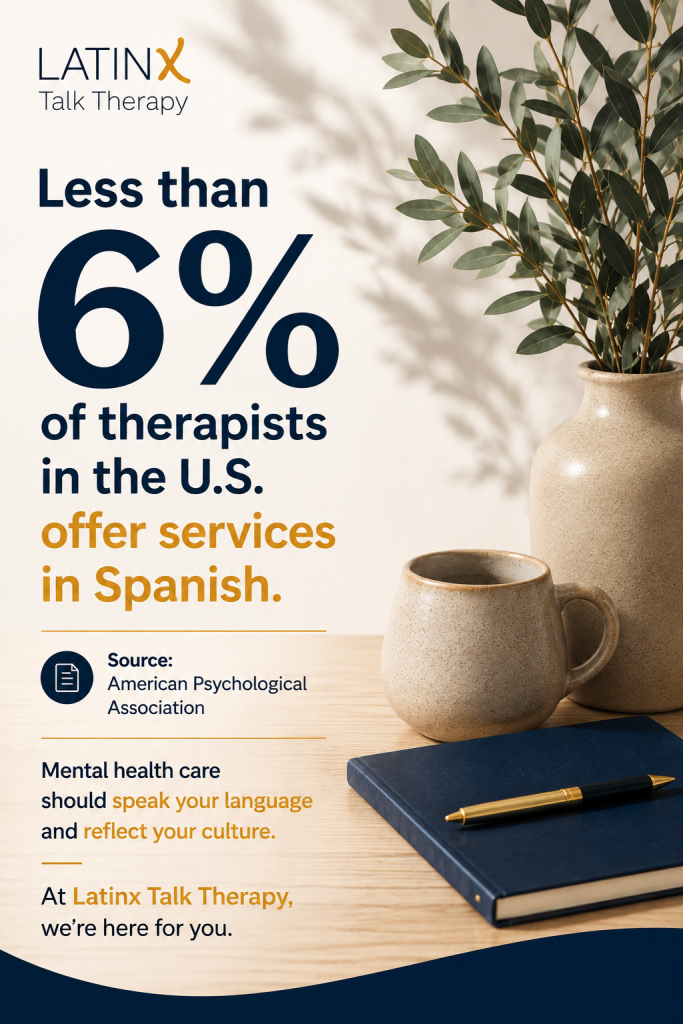
Whatever you’re carrying, identity, family, culture, or something harder to name, you don’t have to figure it out by yourself. Our bilingual, Chicago-based therapists are here to help, in the language and space that feels right for you.
Call (312) 620-7551 to schedule an in-person or virtual appointment, or book online to get started.